The Architecture of Time
How Chang’an Measured Order, One Drop at a Time
In the opening minutes of The Longest Day in Chang’an, something begins to measure the city—quietly, and without interruption.
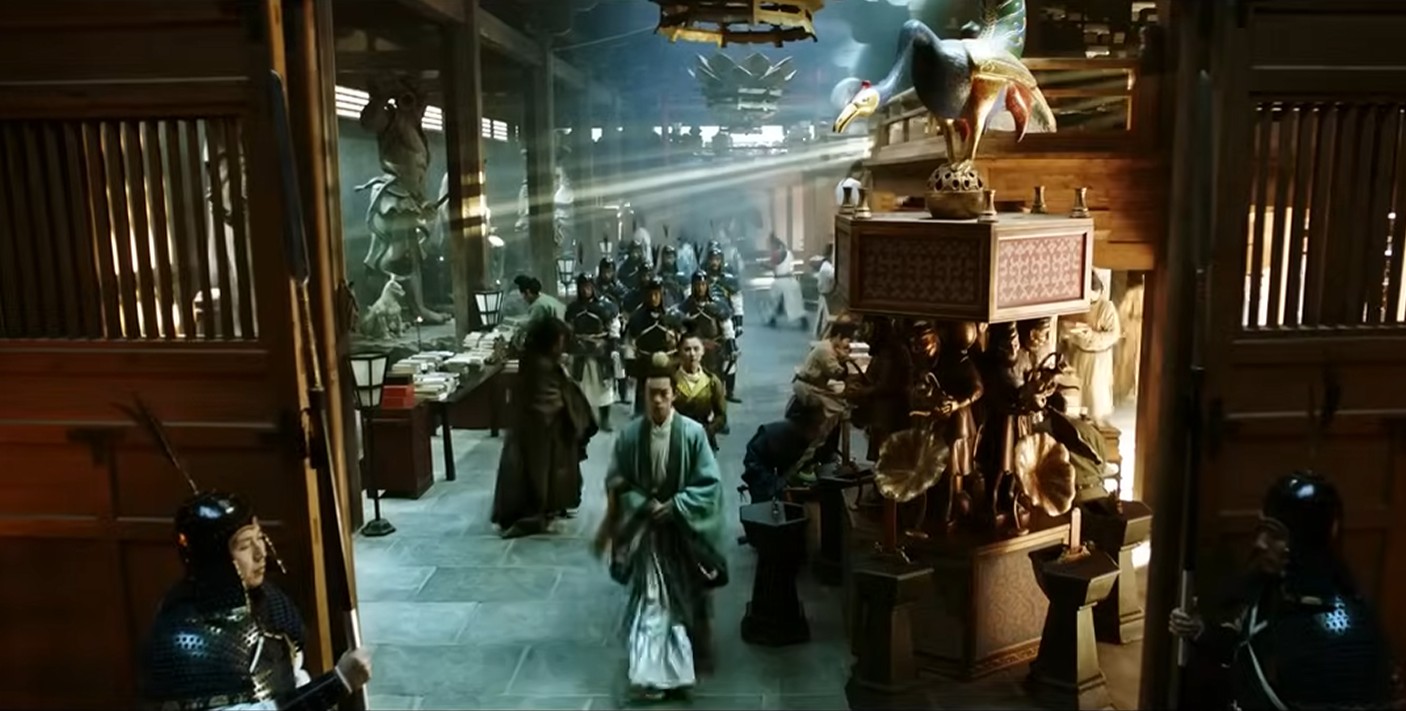 The Heart of the System: Inside the Bureau of Jing’an Si, a towering clepsydra serves as the city’s central processor, measuring order one drop at a time.
Source: Screenshot from The Longest Day in Chang'an.
Water falls, drop by drop, inside a towering clepsydra. There is no urgency in its motion, no spectacle. Yet nothing in Chang’an escapes its rhythm. Before a messenger runs, before a gate closes, before a signal is answered, time has already been counted.
The device does more than tell the hour. It sets the pace at which the city can act.
We tend to imagine premodern time as imprecise, governed by sunlight and habit. But in eighth-century Chang’an, time was not merely observed; it was structured. The day was divided into twelve shichen (时辰), each a bounded interval within which action had to occur. Gates opened and closed to it. Patrols turned on it. Reports were expected within it.
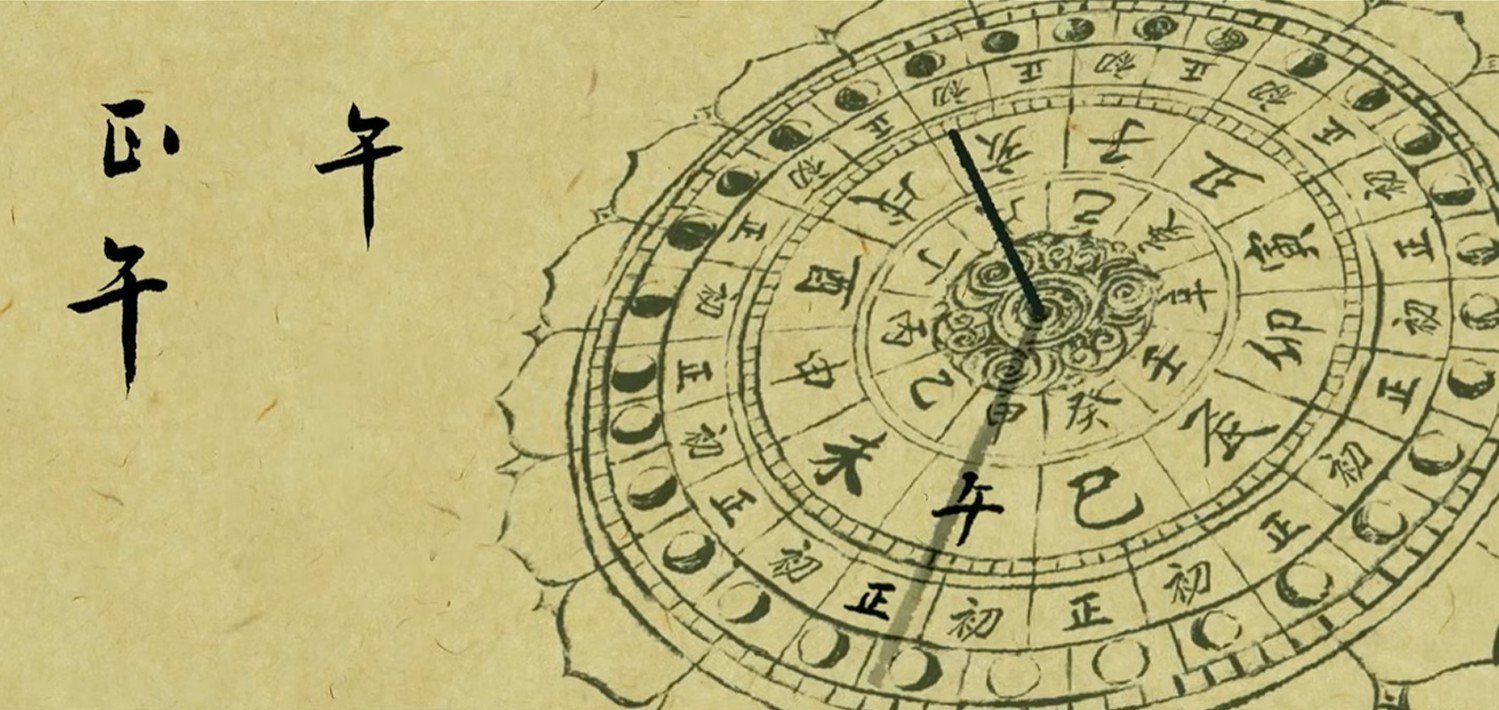 Segmented Reality: In eighth-century Chang’an, time was not a fluid observation but a structured protocol—a 12-hour ‘shichen’ cycle that gated every civic action.
Source: Screenshot from The Longest Day in Chang'an.
A missed interval was not simply a delay. It was a failure to arrive in time to matter.
The effect was less about measuring duration than about disciplining response. Events did not unfold continuously; they were admitted, or excluded, by the clock. What could be acted upon belonged to the present cycle. What could not was deferred—sometimes at cost.
For such a system to function, agreement on time had to be more than approximate. It had to be shared.
From the court’s timekeeping apparatus—maintained by officials responsible for regulating the calendar and the hours—signals moved outward. Drums and bells marked thresholds, their sound cascading across the city’s 108 wards—each essentially a self-contained unit within a larger grid—aligning movement at a scale that no single voice could command. The city did not simply keep time; it kept time together.
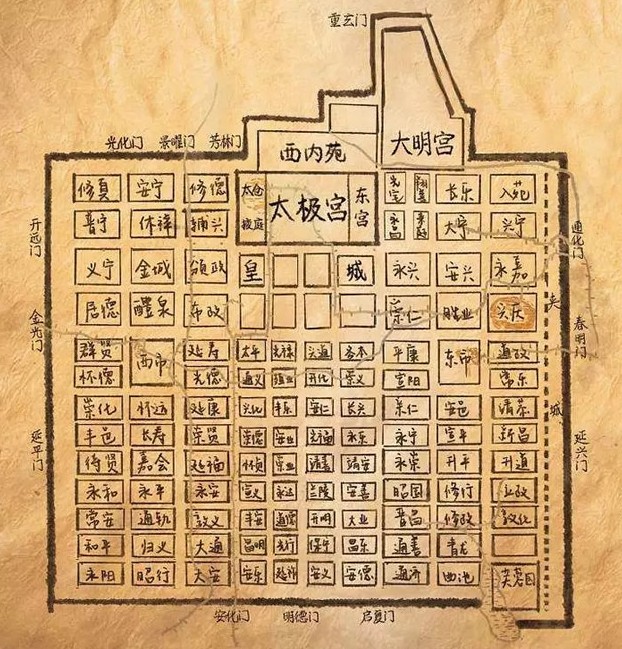 The Synchronized Network: A grid of 108 self-contained wards, each waiting for the cascading sound of drums and bells to align their movement.
Source: Screenshot from The Longest Day in Chang'an.
Without that alignment, coordination would fray. Markets would open out of step. Gates would close against those who believed they still had time. Patrols would pass through spaces already emptied or not yet secured. Disorder, in such a city, would not begin with violence, but with desynchronization.
What gives The Longest Day in Chang’an its urgency is not action alone, but delay.
A signal is raised in a distant ward. It is seen, relayed, and passed on. Somewhere along that chain, a moment is lost. Not enough to stop the system, but enough to strain it. The city responds—but never instantly, always with the faint drag of distance.
Time, in this sense, is not abstract. It is a resource that can be spent, saved, or wasted.
When Zhang Xiaojing is told he has only a handful of shichen left, the pressure is not merely narrative. It is structural. The system within which he operates has limits. Night will come. Gates will close. Visibility will narrow. What cannot be resolved within the available intervals will persist beyond them, harder to see and harder to contain.
The city, so legible by day, begins to lose its clarity.
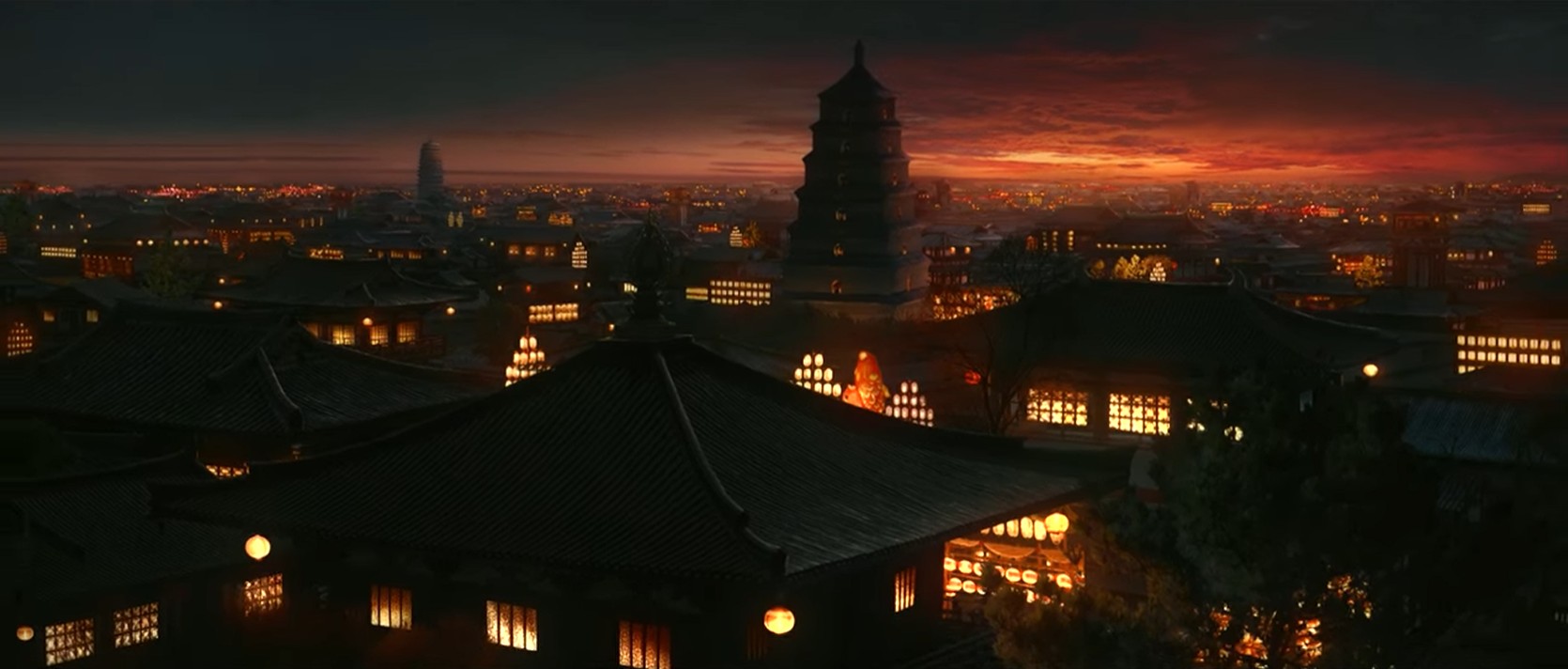 The System Shutdown: As the final interval closes and night descends, the city’s legible order begins to fade, shifting from high-visibility governance to the shadows of the curfew.
Source: Screenshot from The Longest Day in Chang'an.
It is tempting to see in this a distant precursor to our own world of real-time systems, where information moves at the speed of light and delay is measured in fractions of a second. But the resemblance is not technological. It is conceptual.
The ambition is the same: to shorten the distance between event and awareness, and between awareness and action.
The Tang state did not achieve immediacy. It could not. But it reduced uncertainty. By structuring time into shared intervals, it made response predictable. Order did not depend on eliminating delay, but on bounding it.
The clepsydra, then, was not simply a clock. It was a constraint. It defined what could happen, and when.
Stand, for a moment, in that imagined Chang’an. The day is nearing its end. A final signal is raised, carried across the rooftops, answered or missed. Somewhere, the clock continues its silent increment.
By the time the last interval closes, the city has already decided what belongs to the day—and what must wait for tomorrow.
Image Credits All images are used for illustrative purposes under fair use. All rights belong to their respective owners.
Support Independent Research If you found this analysis of The Architecture of Time and the systems of Chang’an insightful, consider supporting this independent research via Ko-fi. Every contribution helps fuel future deep dives into the complex logic of historical systems.